
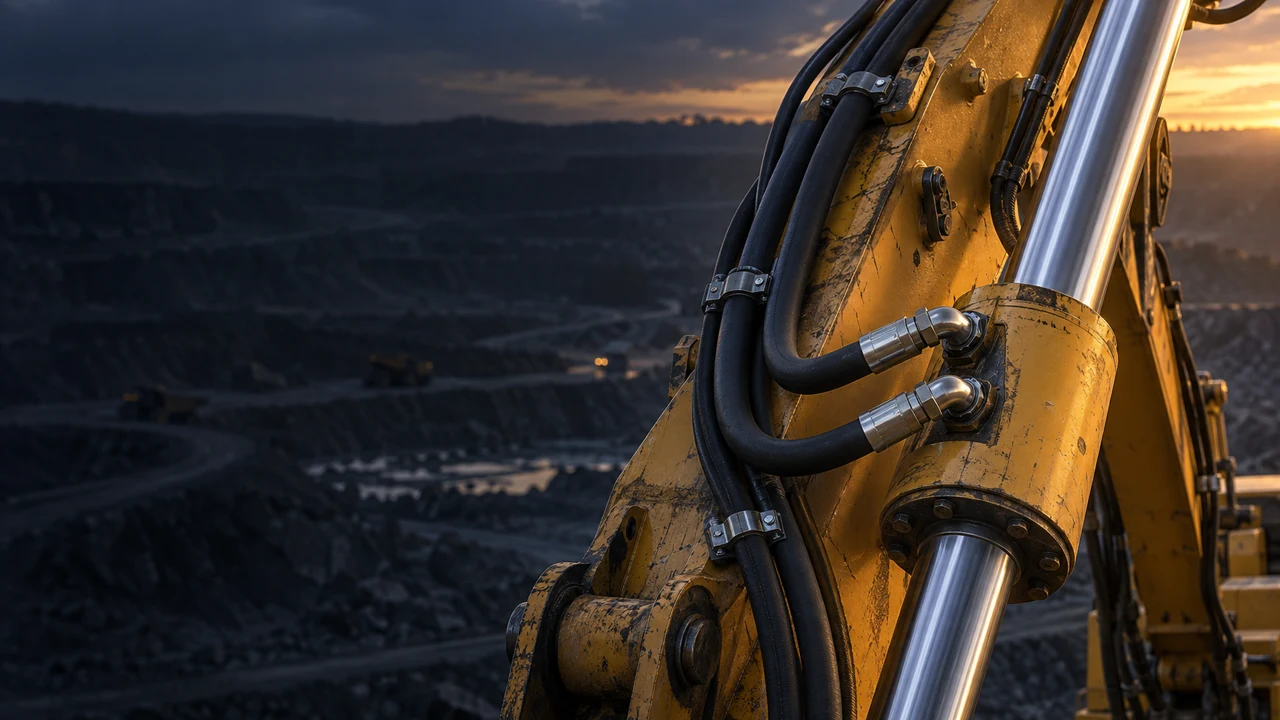
Hose guide for Kazakhstan's steppe climate
How cold winters, hot summers and mixed fleets affect hydraulic hose, with checks for maintenance teams.
Steppe conditions and what they mean for hose
Kazakhstan combines cold winters, hot summers and long rail routes. These conditions shape every quotation.
| Condition | What it does to hose | How we quote for it |
|---|---|---|
| Winter starts well below freezing | Covers stiffen and crack at bends during cold starts | Hose with a low-temperature rating matched to your coldest start |
| Hot, dusty summers | Dust wears covers; heat ages them | Guards and sleeves at contact points, covers suited to summer heat |
| Mixed fleets, old and new | Soviet-era and Chinese machines alongside Western ones | Standard and special ends, machined to sample when needed |
| Long rail routes | Cargo is handled several times on the way | Strong cases packed per machine with clear marking in Russian |
Two extremes in one year
Hoses in Kazakh pits face deep cold at winter starts and heat and dust in summer. A hose chosen only for pressure may crack in January or wear through in July. Check the temperature range on every replacement, not just the pressure rating.
Mixed fleets, mixed ends
When Western, Russian and Chinese machines work side by side, the wrong end fitting is a common source of leaks. Record the fitting type for each position (for example ORFS, DKO or DKOL) along with the length, and send that with any enquiry.
Ordering for a long route
Because cargo travels a long way by sea and rail, plan replacements as kits rather than single hoses, and ship before the cold season.
Checklist for maintenance teams
- Check the temperature range of every replacement
- Record the end-fitting type for each position
- Inspect bends for cracks after cold starts
- Look for dust wear at clamps
- Order kits before winter